
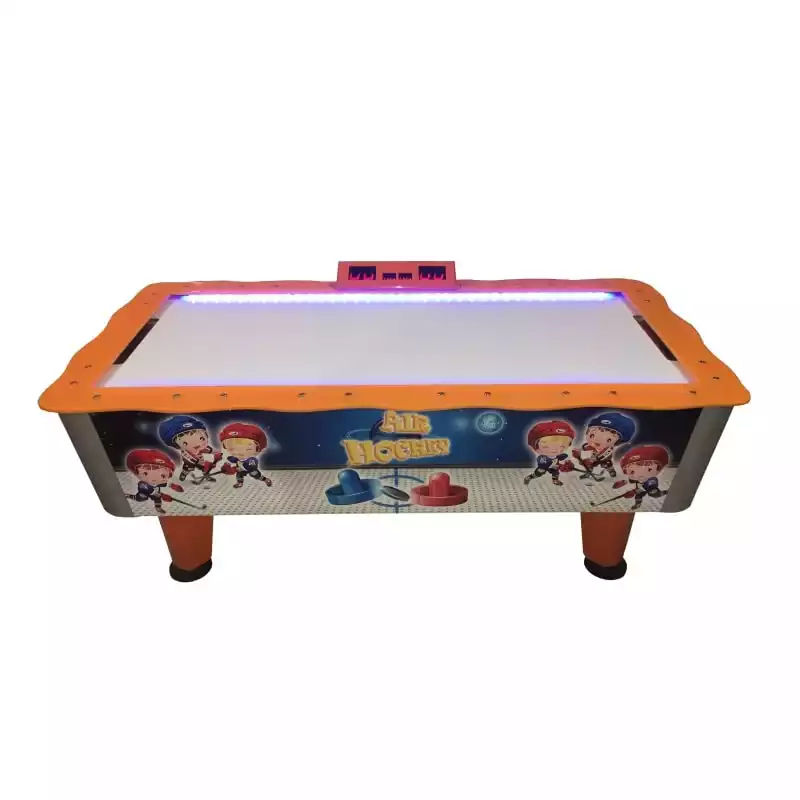
What is a children's-size air hockey table?
A children's-size air hockey table can be described as a reflex game where two children try to send a puck gliding on an air cushion into the opponent's goal with a mallet. This product group, also searched for under terms like children's-size air hockey and mini air hockey table, should not be chosen based on appearance alone. Purpose of use, placement area, player profile, daily intensity, and after-sales support should be evaluated together. TD Oyun Makineleri has manufactured game machines at its production facility in Istanbul since 2010, carrying out product development, manufacturing, sales, rental, technical service, and spare parts under one roof.
This category's fundamental approach works by the puck gliding with low friction through air flow from a perforated surface. Since size, equipment, and game scenario can vary from model to model, each product in the catalog should be examined via its own technical specifications. The category page offers a general selection guide; for exact dimensions, electrical values, or equipment information, refer to the technical items on the relevant product page. This way, instead of choosing a model that doesn't match the need, a solution matching the space and usage style can be identified.
How are children's-size air hockey table models divided?
TD Oyun Makineleri's product group includes models shorter and lower than standard tables, sized for children's height. The difference between models isn't just color or exterior cladding. Cabinet or table size, number of players, materials used, scoring and payment system, portability, access for maintenance points, and visual design also affect the choice. The evaluation criteria differ between a model used continuously in a commercial space and one used more occasionally.
For proper comparison, first list the required features. Then eliminate options that don't match the available space, target user, and business style. Table height, size, edge design, fan performance, and spare parts access considered together produce a healthier shortlist of products. Comparing the whole system rather than focusing on a single image or technical value alone eases the usage flow after installation.
Body, material, and manufacturing details
In this group, the product structure generally consists of components such as an MDF top, sturdy legs, impact-resistant edges, pucks, and mallets. In addition to the choice of material, how the parts connect to each other, how moving sections are protected, and how maintenance access is provided matter. For a machine open to heavy use, the body's stability, cleanable surfaces, and the ability to regularly check parts in contact with the user directly affect business continuity.
In manufacturing evaluation, the supporting structure and service layout inside should be examined as much as the visible cladding. Designs that don't require disassembling the entire body to reach the electronic unit, where worn parts can be replaced, and whose connections can be checked make maintenance easier. The doors, corridors, and transport route to the place of use should also be measured in advance; the installation plan isn't just about the point where the machine will stand.
Game mechanism and control options
The category-specific technical system covers components such as a blower motor, perforated playing surface, and a scoring system depending on the model. Since these units work together, the condition of a single part can affect the whole gaming experience. Accurate score readings, controls responding without delay, moving parts working smoothly, and protected electrical connections are the user's basic expectations. Technical details given on product pages can be compared under these headings when selecting a model.
Depending on the business style, coin-operated, cash-operated, or free-play options can be evaluated. When choosing a payment system, look not only at the coin channel but also at credit settings, access to the cash box, and daily checks. If free play will be used, staff management and game time should be planned. For paid use, the compatibility of accepted coins or cash with electronic settings should be verified before installation.
Choosing correctly based on venue
The main venues for a children's-size air hockey table can be listed as shopping-mall children's play areas, family entertainment centers, schools, hotels, cafes, and home game rooms. However, not every model in the same category suits every venue equally. Expectations about model, sound, size, and game time differ between a family-heavy venue and one with mostly adult players. Whether the venue is indoor or outdoor, operating hours, staff count, and how it relates to other games should also be taken into account.
In calmer settings like homes and offices, size, sound, and free-play use stand out, while in commercial venues body durability, credit system, ease of maintenance, and user turnover matter more. For events, portability and quick setup can be decisive. Clearly explaining the intended venue during the selection conversation, rather than just naming the product, leads to better guidance.
Space measurement and layout plan
For placement, space around the table for two children to move comfortably, level flooring, and an electrical connection should be taken into account. The product's dimensions show the floor space it occupies; the actual usage area grows once player movement, waiting people, service panel access, and safe passage distance are added. Therefore, measuring only length and width before purchase isn't enough. Door width, elevator, stairs, ceiling, outlet, and transport route should also be added to the measurement plan.
The practical approach is separating the table from walkways in the children's area and preserving parental sightlines. If more than one machine will be installed, tall and illuminated models should not block sightlines, sound sources should not be concentrated at one point, and staff should be able to oversee the area. Cables should not be left on walkways; electrical points should be prepared so they don't depend on temporary extension solutions. A good layout supports both ease of use and maintenance access.
Daily operation and user experience
In daily use, keeping the air channels clear, leaving the puck and mallets on the table, and setting game time. Performing a brief function check before opening helps spot possible issues before the user does. Visual surfaces, controls, and contact points should be kept clean; score, sound, light, and payment units should be tested. Short instructions users can understand reduce repetitive questions asked to staff.
A good gaming experience doesn't depend only on the machine working. The steps of approaching the machine, starting the game, following the score, and leaving the area need to be clear. A queue system should be considered during busy hours, and staff and parental sightlines should be preserved in sections used by children. Sound level should be balanced so it doesn't drown out other experiences nearby.
Efficiency and tracking in commercial use
When a children's-size air hockey table is used in a commercial business, a daily tracking routine matters as much as the product choice. A short checklist can be prepared for opening and closing checks; the machine's cleanliness, controls, score display, sound and light system, and payment unit can be tested in sequence. Recording fault symptoms, actions taken, and part replacement dates with their dates gives the technical team clearer information. These records also help identify which models are used more intensively and which consumable parts should be kept on hand.
Usage intensity can vary at different times of day and week. Having the machine in a visible spot alone isn't enough; the user should be able to approach comfortably, not obstruct others once the game starts, and be able to leave the area easily when it ends. It's helpful for staff to be able to see the machine for payment and user safety. In businesses with multiple products, distributing machines with similar sound and motion profiles evenly makes the whole venue more comfortable to use.
Efficiency assessment shouldn't be reduced to play count alone. Waiting time, downtime due to faults, cleaning and maintenance time, users' willingness to replay, and how the machine fits into the flow with other products should be considered together. Sharing the current venue layout and target audience in a project discussion with TD Oyun Makineleri helps make a selection suited to the whole business, not just a single model.
Maintenance, cleaning, and spare parts plan
In this product group, maintenance focuses on cleaning the table holes, and regularly checking the fan air path, puck, and mallets. During cleaning, liquids should not contact electrical and electronic sections, and the manufacturer's recommended methods should be followed. If unusual sound, loosening, delayed response, or score deviation occurs, technical inspection should be requested instead of continuing to force usage. Catching minor wear early can prevent other parts from being affected.
In spare parts discussions, components such as puck, mallet, blower motor, and coin mechanism may come up. To identify the correct part, the machine's model name, a product image if possible, the fault symptom, part size, and connection type should be shared. Similar-looking parts may not be electrically or mechanically identical. Keeping a maintenance log makes it easier to see which part was replaced when and whether the same issue has recurred.
Checklist for buying a children's-size air hockey table
Table height, size, edge design, fan performance, and spare parts access are the main checklist items for a purchasing decision. Rather than deciding based on assumptions without technical data, the dimension and equipment items on the selected model's page should be reviewed. At the quote stage, the intended venue, target age group, estimated daily intensity, payment method, delivery city, and installation conditions should be clearly shared. This information helps determine the right model and the required configuration.
- Calculate the machine's exterior dimensions together with the actual usage clearance needed.
- Verify the model's body, mechanism, and electrical specifications from the product page.
- State the need for coin-operated, cash-operated, or free play before requesting a quote.
- Measure the transport route, doors, elevator, and installation point in advance.
- Treat technical service and spare parts needs as part of long-term use.
Factors affecting price and the quote process
The price of a children's-size air hockey table can vary based on model, size, material, electronic equipment, payment system, custom color or print requests, and delivery and installation conditions. Therefore, comparing two differently specified products on a single price alone doesn't give an accurate result. Rather than quoting a fixed, unverified price on the site, preparing a quote based on need ensures the chosen equipment is clearly defined.
When requesting a quote, you can share a photo or plan of the venue, available dimensions, target audience, preferred operating style, and delivery location. If more than one product is being considered, the machine mix should also be stated. This way, not just a single product but the relationship between layout and usage can be evaluated. Sharing the product page link or model name when contacting TD Oyun Makineleri speeds up the process.
Preparation before delivery and installation
Before delivery, the route the product will be carried along should be checked from start to finish. The building entrance, doors, corridor turns, stairs or elevator dimensions, and final placement point should be noted. Floor evenness and the location of the electrical outlet should also be prepared before installation. If the product consists of multiple parts, enough working clearance should be left for assembly; space for safely unpacking should be planned. This preparation prevents the machine from waiting at the wrong spot on installation day or the transport route changing at the last minute.
Once installation is complete, body stability, moving parts, control units, scoring system, sound, light, and payment mechanism should be tested according to the model. The business operator should learn the basic power on/off, credit settings, and daily check steps. No cables, packaging, or service equipment should be left in the user-accessible area. This function check before first use ensures the product is confirmed to work correctly after transport and that necessary adjustments are completed on site.
If relocation is needed, the machine should not be pulled carelessly by its exterior surface; transport points and detachable sections should be assessed according to the model. Service or transport should not be carried out without disconnecting power. Balance, connection, and function checks should be reapplied at the new location. Especially for large products, planning transport and installation in advance helps protect the product and manage the business's downtime more predictably.
Frequently asked questions
How much space does a children's-size air hockey table need? The exact space depends on the model's dimensions. Player movement, waiting, and service clearance should be added to the product dimensions. How can you tell if a model is suitable for commercial use? Body durability, payment system, maintenance access, and suitability for usage intensity are evaluated together. Is coin-operated and free play possible? This option varies by model and configuration; it should be confirmed at the quote stage.
What is the maintenance interval? Rather than giving a fixed period, usage intensity and part type should be considered; daily visual checks are carried out together with scheduled technical maintenance. What information is needed for a spare parts request? Model name, image, size, connection type, and fault symptom make an accurate match easier. What should be prepared before installation? Flooring, electricity, transport route, and safe usage clearance should be checked.
Safety and supervision for child users
The first criterion when choosing children's game machines is that the product should suit the child's height and usage style. The machine should be placed on a flat, stable floor that won't tip over, there should be no sharp corners or exposed cables, and controls should be at a height children's hands can comfortably reach. The machine's location should be visible to parents and staff.
Game time, sound level, and light effects should be set so as not to tire the child user. Setting up a queue during busy hours prevents children from running around the machine. The daily checklist should include cleaning contact surfaces, checking for loose parts, and ensuring game equipment is complete. If a fault is noticed, the machine should be taken out of use and technical support requested. TD Oyun Makineleri manufactures its boxing, basketball, and air hockey models in the children's game machines group according to children's use; other products in the Children's Game Machines page can also be reviewed to assess differences among the subcategories.
The children's-size air hockey table solution with TD Oyun Makineleri
With over 15 years of manufacturing experience, TD Oyun Makineleri evaluates product selection, manufacturing, sales, rental, technical service, and spare parts needs together. The goal isn't just to place a machine in a venue, but to determine the model suited to the usage style and ensure the product remains accessible to support throughout its operating life. By reviewing the models in the catalog, you can make an initial comparison of visual and technical options.
To get a quote for a children's-size air hockey table, share the area dimensions, venue type, and operating style along with the model name you've chosen. Let our team assess the options based on current product information; dimensions, equipment, and installation details should be clarified before the quote. For product selection and project discussions, you can use the phone number, email, or quote form on the contact page.
Get a Quote